
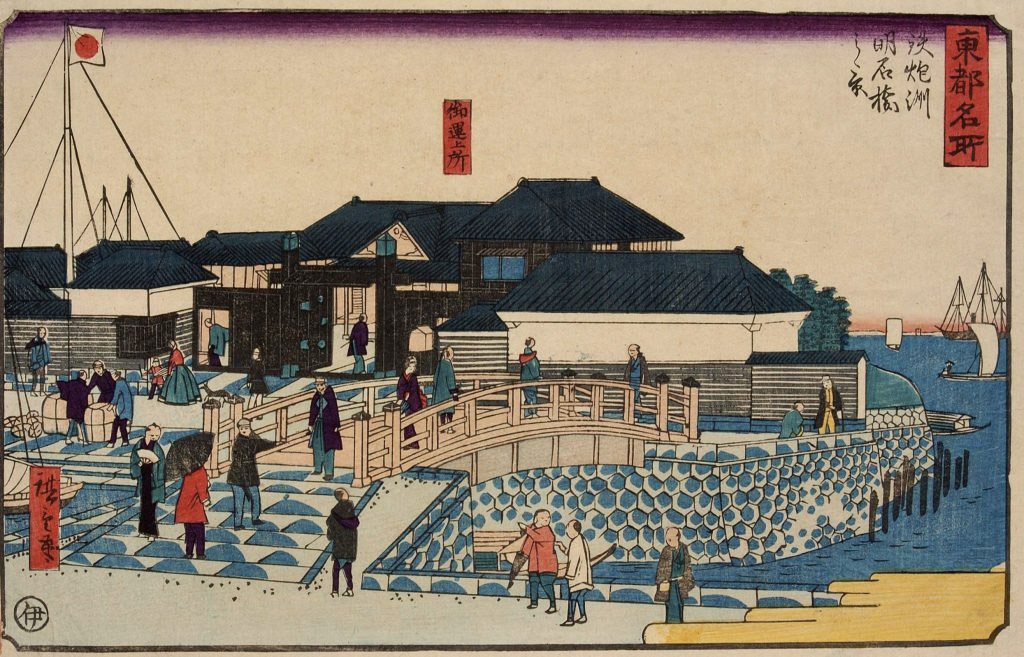
Our History & the Ryotei Tradition
Ginza’s quiet back room —
Tsukiji Jisaku.
Five minutes by car from Ginza. Step past the noren curtain and another world opens: a 2,600-square-metre garden and sukiya architecture, far removed from the city you have just left.
-
Moments from Tokyo Station.
Close to Ginza, Tokyo Station and Haneda, yet standing in stillness on the bank of the Sumida River — a ryotei in the heart of the city that feels a world apart.
-
Sukiya rooms that hold their history.
The gate, the entrance hall and the carved ranma transoms still carry traces of the Iwasaki family villa, of Mitsubishi lineage. More than ninety years have settled into this sukiya house, and it receives each guest quietly.
-
Where the carp glide by.
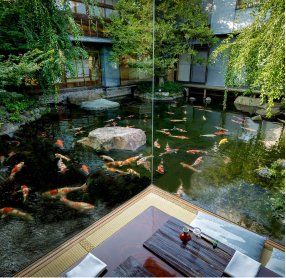
Nineteen rooms, large and small, are arranged around the pond — each one designed so that you may look out upon the pond where the koi swim.
-
Mizutaki, and the kaiseki around it.
Our signature mizutaki, handed down since the founding, takes the leading role. Around it we build a kaiseki of seasonal ingredients prepared in the Edo manner, with the menu changing each month.
-
One craft, one keeper.
Since our founding, the making of mizutaki has been entrusted to a single chef in each generation. The movements and the reading of the fire are passed on by hand and by word, without interruption.
-
An evening of Japan itself.
Geisha entertainment, kabuki performance, tea ceremony, kimono dressing, zazen, table etiquette. Alongside the meal, we prepare occasions in which Japanese culture may be experienced first-hand.
Our Story
The Founding
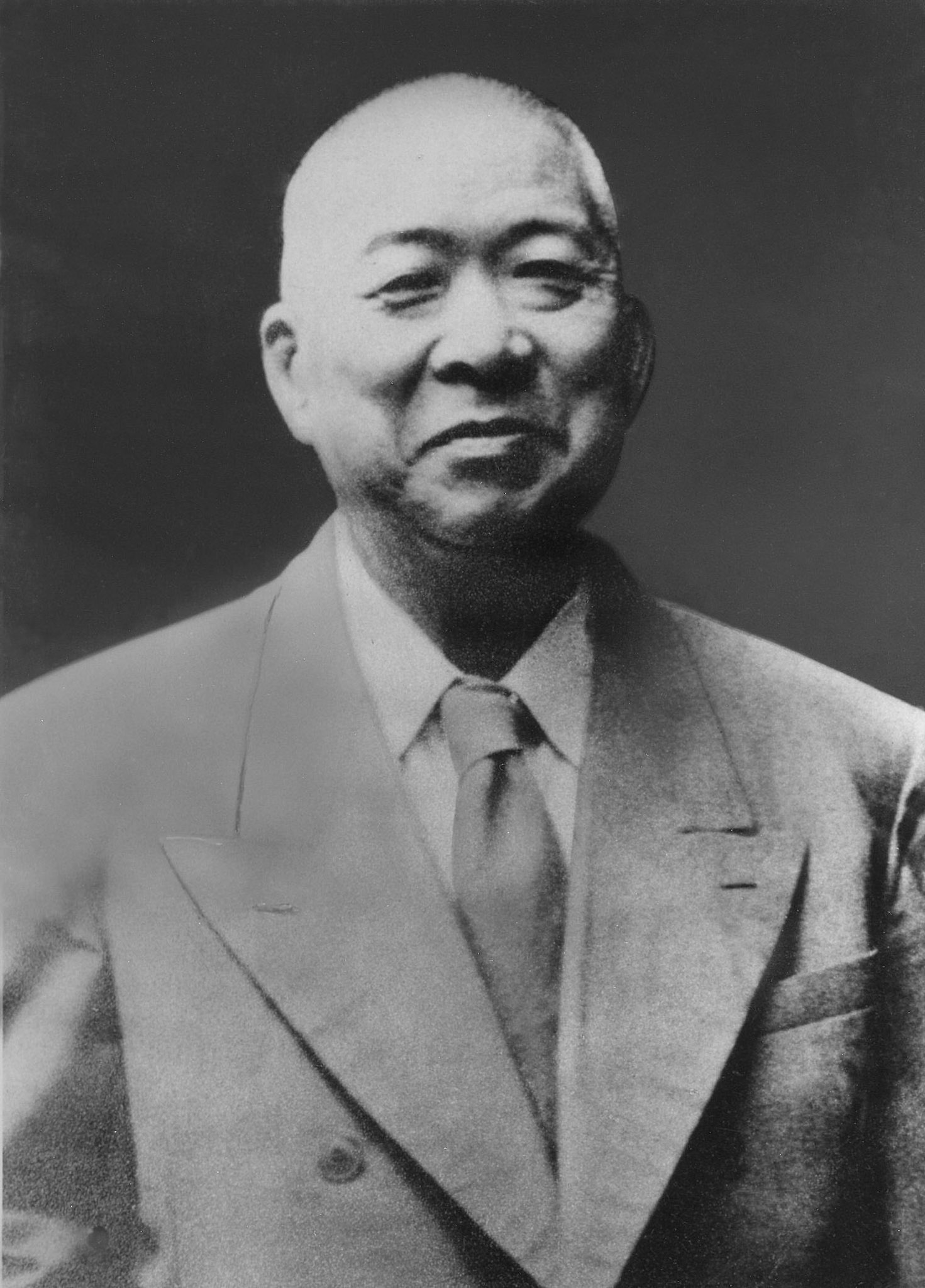
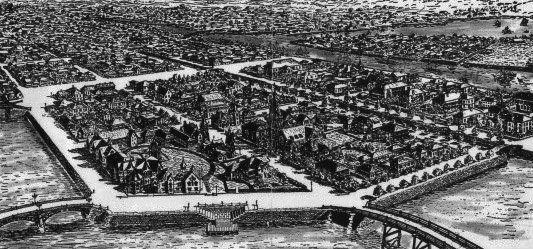
Tsukiji Jisaku was founded in 1931 by Jisaku Honda, its first head chef and proprietor. He had already built a succession of celebrated restaurants across the country — enough to be called the king of pre-war Japanese cuisine — and Tokyo was the venture he had long been preparing for. He was a man of great warmth and appetite for life, who loved celebrations and loved, above all, to surprise people.
The immense stone lanterns and pagodas in our garden were found by Honda himself and brought from across Japan, each paired with a companion so that no piece would stand alone. Beside the entrance sits the bikkuri dobin, the “astonishing teapot” — a nod to the earthenware pots in which mizutaki was served in the earliest days, fired to his order at a kiln in Shigaraki. Its arrival is recorded as having caused such a commotion that it was reported in the newspapers. It remains a symbol of Tsukiji Jisaku, and a delight to our guests to this day.
Coming to Tokyo, Honda devoted himself to the Edo palate. To succeed here, he believed, he had to cook for the taste of Tokyo. And so, apart from himself, he engaged no chefs from Kyushu, hiring only those he had chosen in Tokyo. It was a decision only a cook of his standing could make — one who understood exactly how the cuisine of Edo differed from his own.
The Ryotei Culture of Edo
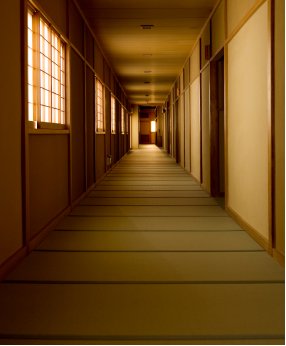
Establishments that could properly be called restaurants appeared in Edo around the Meiwa era (1764–1772), in the middle of the period. Until then, a banquet meant Yoshiwara and little else. In the Anei and Tenmei years that followed, celebrated houses opened one after another in Fukagawa, Ukiyo-koji, Mukojima and Nakazu, most of them serving the samurai class as places of hospitality.
Honda’s insistence on a site beside the Okawa was no accident. From the Edo period through Meiji, Taisho and into early Showa, the river carried the traffic of the city, and he knew that nearly every fine ryotei of Edo had stood along its banks. His choice was an act of devotion to that culture.
In the early Edo period the food and dress of the city were held to be inferior to those of the Kansai region — Edo was largely newly developed land, grown by people arriving from the surrounding provinces. Yet as the period matured and daily life grew settled, the city turned its attention to the pleasures of the table.
Fortunes Changing, and the Present Day
Tsukiji Jisaku opened in 1931, the year of the Wanpaoshan incident and the Manchurian incident. Word spread quickly among those who knew, and the house flourished. Encouraged, Honda carried Japanese cuisine far beyond these shores, as far as the continent.
During the war years, the house was requisitioned as a dormitory for the Ishikawajima shipyard.
In 1951 Jisaku Honda called upon Toshiji Hase. The two had been close since before the war, and Hase had long regarded him as a mentor; hearing his elder’s dearest wish, he was deeply moved, and resolved to restore Tsukiji Jisaku. Hase raised the funds and bought the house back, while Honda gathered furnishings to his own taste and called back the chefs and the nakai who had served here before. On 18 September 1951, Tsukiji Jisaku opened its doors once more. Its former popularity returned almost at once, and that prosperity is the foundation on which we stand today.
Jisaku Honda, our founder, was an entertainer in the truest sense, who wished only to bring people joy through the culture of food. Toshiji Hase was a man of great humanity, who loved the culture of Japan from the heart.
For more than ninety years we have worked without losing sight of that spirit. We hope you will continue to favour us with your custom, and that your time here — however brief — brings you pleasure.