



![Tsukiji Jisaku [Official] Ryotei Famous Mizutaki -Official direct reservation special offer-.](https://jisaku.co.jp/wp-content/uploads/2025/01/header-logo.png)
Japanese Seasonal Signs That Come to Life in February
February is a month in which the remnants of winter are still strong, but signs of spring can be felt little by little.
In Japan, many events have been passed down through the generations to mark the seasons and to wish for good health and prosperity. From Setsubun, Hatsuuma, Hari Kuyo, and Valentine's Day, these months are rich in culture, where “prayer” and “love” intersect.
At ryotei (Japanese-style restaurants), we also cherish the wishes that are contained in these events, as well as the ingredients that make us feel the spring run.
1,What is Setsubun - Traditional event to drive away evil spirits and invite good fortune
The event most familiar to people when they hear the word "February" is "Setsubun.
Setsubun means "An event to ward off evil spirits and wish for good health and happiness at the turn of the season.In particular, in "Theday before the first day of spring(The Setsubun festival is usually held on the day before the first day of spring (around February 3), when people throw beans into the air to drive out bad things by chanting "Oni wa soto, Fuku wa uchi" (Oni wa soto, Fuku wa uchi) and eat ehomaki (rolls wrapped in ehoumaki). Setsubun used to be held four times a year (the day before Risshun, Risshatsu, Risshu, and Risshuwinter), but since spring was regarded as the beginning of the year, Risshun Setsubun came to be regarded as the most important.
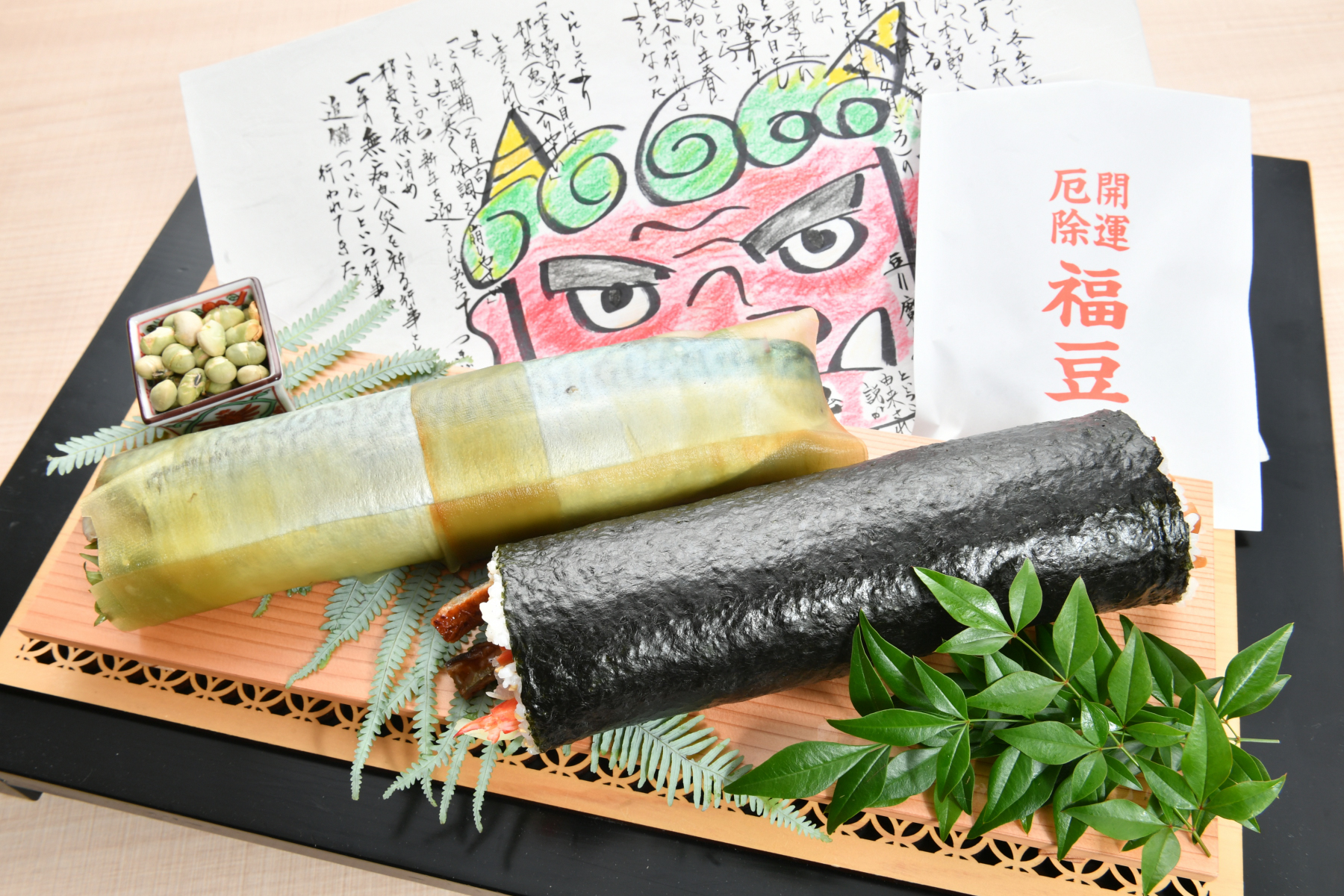
Ebomaki - a festive food for Setsubun that invites good fortune.
Eho-maki is an auspicious food eaten on Setsubun when you face the "eho" (most auspicious direction) of the year and eat a whole roll with a wish. 2026 is the year of the eho-maki.south-southeastIt is.
The characteristic is to bite the whole fish without a knife, as it is meant to “engulf” good fortune and “not cut off” karma.
The original form of the dish is said to have seven kinds of ingredients, in reference to the seven gods of good fortune,Prosperity in business, safety in the home, good healthThe custom has spread throughout the country as a way of wishing for the
Jisaku will offer a variety of seasonal seafood and artisanally crafted ehomaki rolls to make the Setsubun event more colorful.
2,What is Hatsuuma (First Horse Day) - A good day to pray for Inari faith and prosperous business
Hatsuuma" is an event to offer prayers to the deity Inari on the first day of the second month of the year, which is believed to be the day when the Great Inari God descended to Mount Inari.
Known as a day to pray for a good harvest, prosperous business, and family safety, the custom of offering fried bean curd and inarizushi, the favorite food of the messenger fox of the Inari shrine, remains throughout Japan. Inarizushi is eaten on this day as a good-luck food to express gratitude to the gods and to invite good fortune.
3,What is a needle memorial service?
February 8 is "Hari Kuyo" (needle offering). In this event, broken needles are inserted into tofu or konnyaku, and offerings are made to the deceased in gratitude for their hard work.
The beautiful spirit of the Japanese people, who appreciate tools and treat things with care, has been passed down from generation to generation. It is also a day to wish for improvement in sewing, and is a day when the culture of respecting handicrafts comes alive.
Even in ryotei cuisine, respect for utensils and ingredients is inherent, and care and attention to detail are evident in each and every gesture.
4,Valentine's Day - A day to give the gift of love that has spread throughout modern culture
What is the origin of Valentine's Day?February 14, when "St. Valentine," a priest who conducted a wedding ceremony in secret against the emperor's orders in ancient Roman times, was executed.It is considered a day to commemorate his love and courage, dating back to In Japan, the custom of giving chocolates has developed into the world's unique "Confession of Love" day. Originally a Christian "Feast of Love," it became associated with the patron saint of lovers in the Middle Ages, and in Japan, marketing efforts by chocolate companies and others helped to establish a unique "women to men" culture.